Category Early Childhood Education

Why Sharing and Teamwork Are Learned Best in Preschool

Sharing and working together are valuable skills, and preschool is the perfect time for children to acquire these abilities. A high-quality preschool and daycare center creates a safe environment that gives children ample opportunities to develop social skills they will use for the rest of their lives. Early childhood learning happens most quickly when kids are preschool-aged, because their brains are growing rapidly and they’re naturally curious about how to get along with others. Children can gain social skills at home from parents and siblings, but preschool creates situations where sharing and teamwork are necessary for fun and friendship. Educators trained in child development know how to help young children work through conflicts and promote working together. The daily routines, group activities, and peer interactions provide many opportunities to practice these skills in safe, supportive ways. 

Learning Social Skills

Preschool children are at the perfect stage for learning, sharing, and teamwork because their brains are developing rapidly. These children begin to realize that others have different thoughts, feelings, and needs. This is when they can begin to understand why sharing matters and how working together can be fun rather than frustrating. Their communication skills are improving, so they can talk about problems rather than cry or engage in negative behaviors. Preschoolers’ natural curiosity prompts them to want to make friends, but they usually need a little help in how to do so. Practice and guidance to learn social rules and how to make relationships work are skills they will need to be successful in life. 

Learning Through Play

Sharing and teamwork are taught through play activities, which make learning fun and feel less like lessons. Circle time, group projects, and cooperative games naturally provide opportunities for children to practice teamwork and achieve a common goal. The classroom is a rich environment for learning these skills. Art projects teach lessons about sharing supplies and finding the beauty in different creative approaches. Music and movement activities require careful listening to one another to follow group rhythms. 

Peer Teaching and Modeling

Preschool-aged children learn remarkably well through peer teaching and modeling. When a child sees another child sharing snacks and being included in games, they want to mimic the behavior to get the same positive reinforcements. Mixed-age classrooms are particularly effective in teaching sharing and teamwork because younger children have clear role models, and older children get to practice leadership and helping skills.

Long-Term Benefits

Children who develop strong sharing and teamwork skills in preschool have significant advantages when their traditional schooling begins. They adapt more easily to expectations, make friends more quickly, and participate more successfully in group activities.  Students with good communication skills are more willing to ask for help and work cooperatively on projects. The confidence that comes from successful peer relationships in preschool helps children approach new social situations head-on rather than avoid them. 

Developing the Right Skills

Sharing and teamwork are essential skills for success in all areas of life. Children who master these abilities early have advantages that last throughout their lives. Investing in quality early childhood education is an important decision. While parents are certainly capable of teaching sharing and teamwork at home, the preschool environment offers advantages you can’t get at home. The variety of personalities, backgrounds, and approaches that children encounter in preschool teaches flexibility and adaptability that can be harder to develop at home. Enrolling your child in the right preschool and daycare center can significantly elevate their academic career. 

Call us today to learn more about how preschool can help your child learn to share and work as a team!
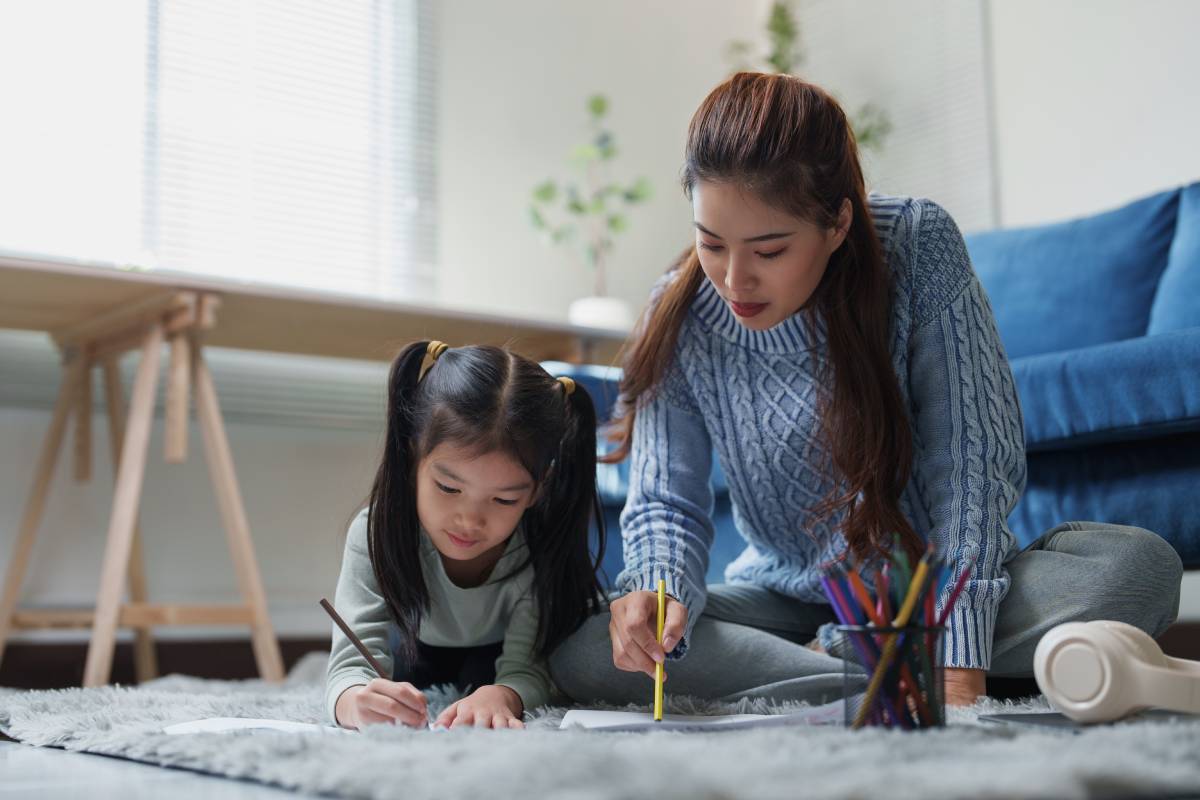

Mother and daughter lying on the floor drawing and coloring together

Simple Educational Activities to Do With Your Child Daily

Busy parents often worry they aren’t doing enough to support their child’s development. Effective learning doesn’t require elaborate lesson plans, expensive materials, or hours of dedicated time. Research in early childhood education consistently shows that simple, everyday activities provide effective learning opportunities when done intentionally and with engagement. While preschool and daycare programs offer structured learning environments, the education you provide at home through daily routines and playful interactions significantly impacts your child’s cognitive, social, and emotional growth. These straightforward activities take just minutes but build skills that benefit a lifetime. 

Morning Learning Opportunities

Your morning routine is ripe with opportunities hiding in plain sight. Sequencing and independence are lessons found in the simple act of getting dressed. Simple activities like fastening buttons and climbing or descending stairs are natural opportunities to practice counting. Families who incorporate number practice into daily activities develop stronger mathematical reasoning than their peers who have only begun encountering numbers during formal instruction. 

Whether part of your morning routine or a weekly routine, sorting laundry is another quick learning moment. You can ask your preschooler to sort socks by color or to separate family members’ clothes. This is an efficient way to teach categorization skills, a frequently used cognitive ability that supports everything from reading comprehension to scientific thinking. 

Mealtime Learning

Meals provide ample opportunities for vocabulary building and scientific observation. You can describe the characteristics of food using broad and engaging descriptors. Cooking together is a good way to introduce basic science concepts, such as ingredient mixing and the effects that result. Even though your three-year-old won’t understand the concept of chemistry, you’re doing early construction for the development of scientific thinking. Preschoolers can benefit from simple prep tasks such as pouring, stirring, or arranging food. 

Commuting

Road trips and daily commutes become a time for parents to engage with their children and point out things in their environment. “I spy with my little eye” is always a fun game that helps children make word-object associations. Rhyming games teach them literary techniques and phonetic awareness. Singing songs, especially those that implement higher rates of repetition and motor movements. Research supports that this supports memory, language, and coordination. 

Bath Time Learning

Bathtime is a jungle of possibilities for exploration of scientific concepts and sensory adventures. Toys, containers, funnels, and cups for water play are a valuable resource for prompting experimentation. Washable crayons or floating letters can be used to teach how to spell their name. Keeping it playful and relaxed will ease tension that tends to kill the thrill of learning. 

Bedtime Learning

Bedtime can have a significant impact on learning; simple routines not only help ease the transition but can also serve as an educational tool when applied consistently. Reading remains a tried-and-true educational activity, no matter how small your child is. Bedtime stories help make associations, recognize patterns, and build phonetic understanding. After you finish your story, for preschool children, prompting dialogue about their day is an efficient way to develop vocabulary, self-reflection, and narrative skills. 

Education in the Little Things

Educational activities don’t require extensive purchasing of the latest lessons and learning toys. It doesn’t even require you to dedicate large amounts of your time. Little additions to simple daily tasks can have a meaningful impact on your child’s emotional and educational trajectory. These simple interactions complement daily routines and create consistent learning opportunities throughout their day. You have the opportunity to make almost any moment one for learning and development. The best learning shouldn’t feel like learning at all. 

Learn how we can help make the small moments have great impact by reaching out today

Thoughtful Elementary Child Doing Schoolwork.

How Children Develop Concentration in Their Early Years

If you have ever spent more than 15 minutes with a toddler, you probably noticed their attention darts from one thing to the next like butterflies in a garden. This is normal and nothing that should cause anxiety. Concentration is not a natural-born ability; it takes time and effort to gain. 

A high-quality preschool and daycare center can be a valuable asset for developing concentration through environments designed to nurture growing attention spans. Preschool learning programs that practice thoughtful consideration gently guide children toward concentration-building activities without being forceful. If you can gain a deeper understanding of this cognitive process, you can give your child added support in impactful ways. 

Science Behind Focus Development

Focus is a learned skill that develops gradually as the brain matures. In early childhood, the brain is hard at work forming neural pathways related to attention. Every time your child engages with a variable in their environment, their brain practices sustaining attention. This development is a timely process, and many parents and educators make the mistake of expecting children to maintain focus beyond their cognitive abilities. Developing brains require patience, practice, and the right environment to gain greater attention spans. 

Environmental Factors

A high-impact variable on focus development is the environment. When a child is presented with a room in disarray and clutter, it creates a large amount of distraction as they bounce from stimulus to stimulus. Constantly scanning and assessing their surroundings. On the opposite end, organized spaces promote deeper engagement. 

Natural light stimulates mood regulation and alertness. Environments free of excessive noise reduce stimulation and distraction, encouraging engaged attention. Defined areas for designated activities create understanding of expectations and structure. Even the toys available influence focus. Toys like blocks, clay, and age-appropriate puzzles help with sustained attention. Environments geared towards improving concentration and focus don’t force it; they invite it. Natural engagement kicks in without much thought when the environment is set up strategically. 

Power of Play

One of the most natural activities a child engages in is play, and when approached correctly, it is a highly effective tool for developing concentration. When children have the opportunity to interact with toys and in activities they enjoy, they become absorbed without the added external pressure. Imagination and joy drive further focus, creating longer attention spans. Structured activities that support concentration are highly encouraged as an addition to unstructured play, as they keep children engaged because they want to, not because they have to. 

Role of Educators and Caregivers

Children develop concentration through consistent routines, minimizing distractions, breaking tasks down into their most straightforward steps, and engaging in focus-building activities. Educators and caregivers play a large role in creating these opportunities for children. Children learn a great deal through modeling. Seeing caregivers actively engaged and focused naturally reinforces these behaviors. Encouragement is always a more powerful reinforcer than pressure. Finally, they consider how each child learns and what prompts their concentration to personalize the child’s environment. 

Nurturing Focus

You can’t rush or force the development of concentration, and trying to do so causes more harm than good. The gradual acquisition of concentration is shaped by brain development, environment, play, and supportive guidance. You can demand attention naturally by creating favorable conditions. Calm spaces, engaging activities, and self-autonomy and exploration each contribute to positive brain development, not just focus, but across most areas of cognitive function. 

Learn more about how we can help your child gain concentration and clarity by getting in touch