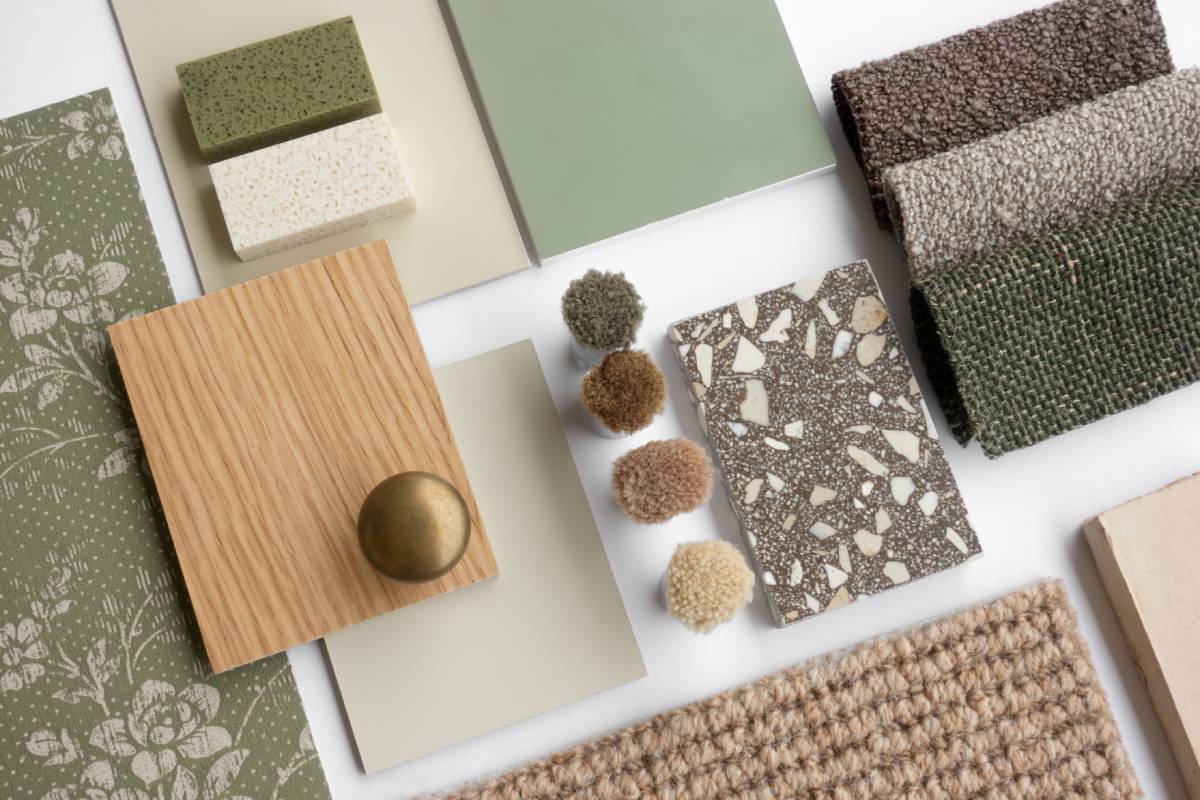
Green Natural Modern Interior Design Materials Board With Samples and Swatches

How to Choose the Right Finish for Your Walls, Floors, and Ceilings

If you’ve ever walked into a room that was well composed, it didn’t get that way without a lot of work and attention to small details. Sometimes, the seemingly most minor details can bring a whole room together. Everyone knows furniture and the color of your walls are what immediately draw attention in a room, but have you ever taken the time to analyze the finishes and surface treatments on your walls, floors, and ceilings? Before investing in high-end luxury furniture, carefully consider what you want to achieve with your finishes. Not every finish pairs well with every condition and aesthetic goal. You will be much happier with the results in your space if you take the time to consider which finishes suit what you are going for, so whatever you decide to do with your space will tie in well with your walls, floors, and ceilings. 

Types of Wall Finishes

Painting is often one of the first and most frequent things people change in any room. Each one gives off a different feel and aesthetic. This gives you a few different options on how you want your walls and room to look when it all comes together. 

Flat or matte finish paints are the most subdued on the shine scale. It creates a smooth appearance and hides bumps and cracks in walls exceptionally well. The drawback is that it is harder to clean. The eggshell finish has a very slight sheen, similar to that of an egg. Giving your room a soft and pretty finish, it is easier to clean than flat paint. 

Moving up the ladder in the shiny category, satin finish has a touch more shine than eggshell. This finish cleans up nicely, making it great for busy areas. A gloss finish will yield the highest shine. Many love its durability and easy-to-clean features. This is a common finish in kitchens and bathrooms where there is a high chance of splashes and spills. 

Types of Ceiling Finishes

Even though ceilings are overhead, the finish you choose is still important. Flat ceiling paint is the most popular choice. It hides imperfections well, and light doesn’t bounce weirdly. Choosing a light color, like white, will help your room feel bigger, too. Textured ceilings like popcorn texture were widely popular several years ago, but some still like the look it gives their space. Special ceiling treatments add a little fancy and uniqueness. Many choose wooden planks or decorative tiles. Wallpaper ceilings are quickly becoming popular as well. 

Types of Floor Finishes

Floors take a lot of wear and tear from feet, shoes, spills, and life itself, so they need to be tough and durable. Hardwood can be either shiny or matte. Tile and stone finishes polish well for shine and can be left natural for a rugged feel. Laminate finishes already come with a protective layer that is scratch-resistant and easy to clean. 

Finishes for Each Room

Always consider the room itself before deciding on a finish. High-traffic areas like kitchens, bathrooms, and hallways demand easy-to-clean finishes. Bedrooms and living rooms are calmer spaces. This may be more suitable for finishes like flat or eggshell that look beautiful but are more challenging to clean than others. 

Bringing It All Together

Choosing the right finish for your walls, floors, and ceilings might seem tricky, but with a little information, you can choose what is right for you. Shiny finishes will be the easiest to clean. On the other hand, matte finishes hide imperfections and give the space a soft appearance. Think about how each room is used and how you want it to come together, and you will have a finish you love in no time. 

Find the perfect finish pairing by getting in touch with an expert today. 
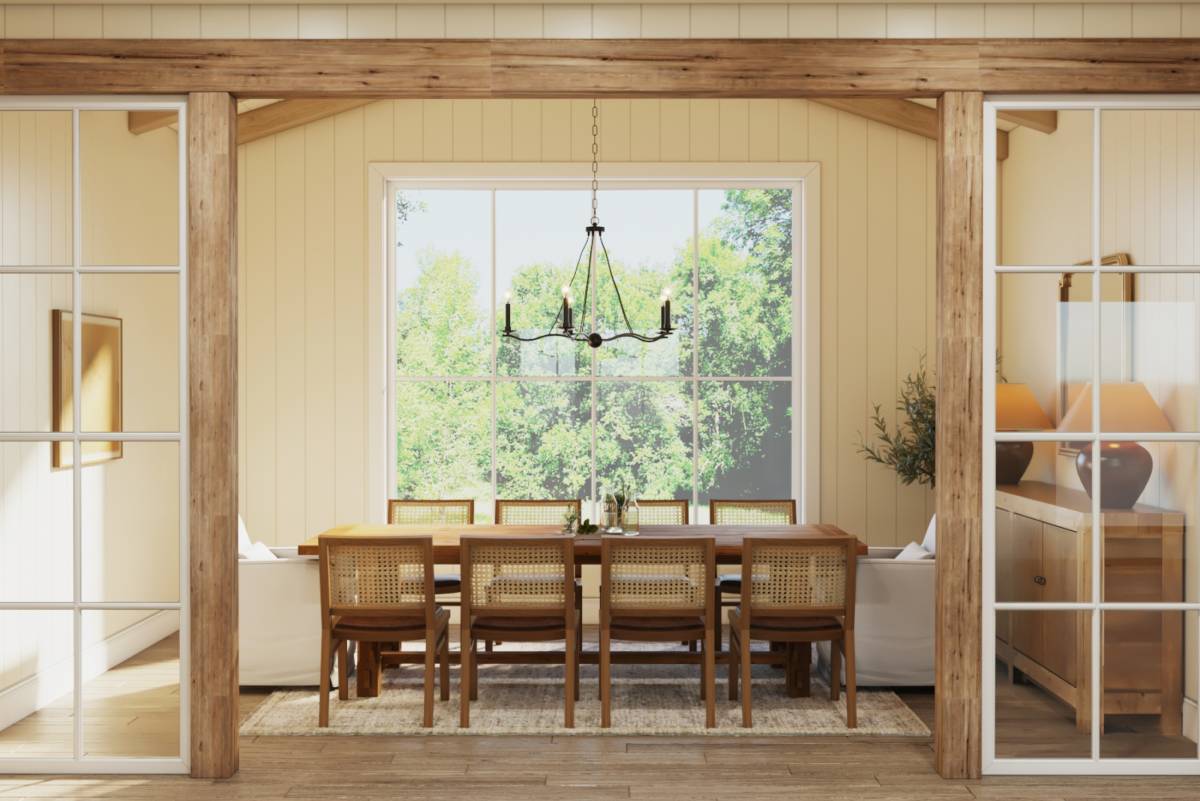
Dining room with matching table, chairs, and wood floors.

How to Match Dining Chairs to Different Woods?

Creating a balanced dining space requires more than acquiring beautiful individual pieces. It demands coordination between elements. For those who buy high-end luxury furniture, understanding how different woods, finishes, and tones interact within a single space is of great benefit. The task of matching luxury dining chairs to a dining table might seem straightforward. Still, the reality involves knowledge about the relationships between wood type, undertones, grain patterns, and aging characteristics. 

Color and Undertones

Every wood type carries an inherent undertone that determines its compatibility with other materials. These undertones fall into three primary categories that serve as the foundation for all cohesive decisions. Warm woods have red, orange, or yellow undertones. Cool woods feature gray, taupe, or ash undertones. Neutral woods occupy a balanced middle ground without pronounced undertones and offer flexibility when coordinating with existing furniture. To identify your dining table’s undertone, examine it in natural daylight while holding pure white and warm cream fabrics alongside. 

Coordination

The most intuitive approach would be to select chairs that are the same wood as your table. However, achieving accurate coordination requires understanding subtle variations within tree species. When coordinating same-species pieces from different manufacturers, focus on finish compatibility rather than expecting perfect color uniformity. Grain pattern variation offers another coordination dimension within species. A table featuring bold figured grain might pair elegantly with chairs showcasing quieter, more uniform grain. This creates a visual hierarchy through pattern variation while maintaining consistency. 

Contemporary designs increasingly embrace intentional wood mixing. To create a balanced space,  pair woods with neighboring undertones. Tonal coordination matches woods of different hues but similar lightness and darkness. This approach creates subtlety that appears coordinated without monotonous uniformity. Complementary contrast offers a dynamic visual tension. This bold approach requires confident execution and careful proportion management, as high contrast risks discord when improperly balanced. 

The Rule of Three

Design theory recommends limiting wood tones in a single space to three distinct variations. This creates interest without visual chaos. The dominant wood is typically the dining table as the largest surface and visual anchor. Secondary wood provides substantial support, typically in the form of dining chairs. Accent wood should have little presence, a sideboard or shelving unit to introduce a third complementary tone. When selecting luxury dining chairs as your secondary element, ensure they possess sufficient presence to register as an intentional design choice without overshadowing the table’s dominance. 

Considerations for Lasting Harmony

When coordinating new chairs with an established table, consider aging patterns carefully. Pairing woods that age similarly maintains harmony across decades. Combining woods with opposite aging directions might begin coordinated but visually diverge over time. 

Wood Finishes on Color

Finish selection influences wood color perception dramatically. Understanding finish characteristics enables better coordination decisions. An oil-finished table paired with lacquered chairs will appear different even when made from identical wood because finishes affect light reflection, color saturation, and surface texture. 

Making Good Investment Decisions

When you purchase high-end luxury furniture, you are making a long-term investment that should give you years of enjoyment and function. Getting up to speed on wood coordination principles ensures your dining space maintains visual harmony as your collection evolves. Before making any purchases, thoroughly analyze your existing tables’ undertones, grain characteristics, and finish type. Consider how pieces will age together. Many luxury furniture manufacturers offer design consultation services that prove helpful when making significant coordination decisions.

Matching luxury dining chairs with different woods is both art and science. The most cohesive dining spaces reflect thoughtful curation rather than hurried matching. Your dining space should be a testament to the quality of individual pieces and the intelligence of their coordination. 

CTA: On the market for high-end luxury dining chairs, shop our selection now. 

Reference: 

French, L. (2024). How to Choose Chairs for Your Dining Table