Archives 2025

Featured image for How to Choose Montessori Tools

How to Choose Montessori Toys

How to choose Montessori toys is one of the most common questions parents ask when they first start exploring a Montessori education. After all, toys are so much more than just a way to keep children entertained. They’re also a key tool for development, and with that in mind, they need to be carefully chosen to align with how children naturally learn: through movement, exploration, and hands-on experience. 

Whether you’re building a home environment that supports Montessori principles or simply want toys that do more than flash and beep, understanding how to select them can make all the difference in your child’s growth. Let’s dive right in so you can start picking Montessori-style toys with confidence. 

How to Choose Montessori Toys Based on Core Montessori Principles

Montessori toys differ from mainstream options in a few key ways. They are designed to be simple, purposeful, and rooted in reality. When choosing Montessori toys, look for items that are made of natural materials, isolate one skill at a time, and encourage independence.

You want toys that are beautiful but not overwhelming and ideally made of wood, metal, or fabric instead of plastic. They should teach cause and effect, invite repetition, and help develop concentration. Rather than overstimulating a child with flashing lights or loud sounds, Montessori toys allow the child to engage more deeply and meaningfully. This approach is woven into every element of Montessori education and should benefit the child on their learning journey.

Age-Appropriate Choices for Montessori-Aligned Toys

Choosing the right toy also means selecting one that suits your child’s age and developmental stage. In Montessori, this concept is known as “following the child,” or meeting children where they are to support their natural growth.

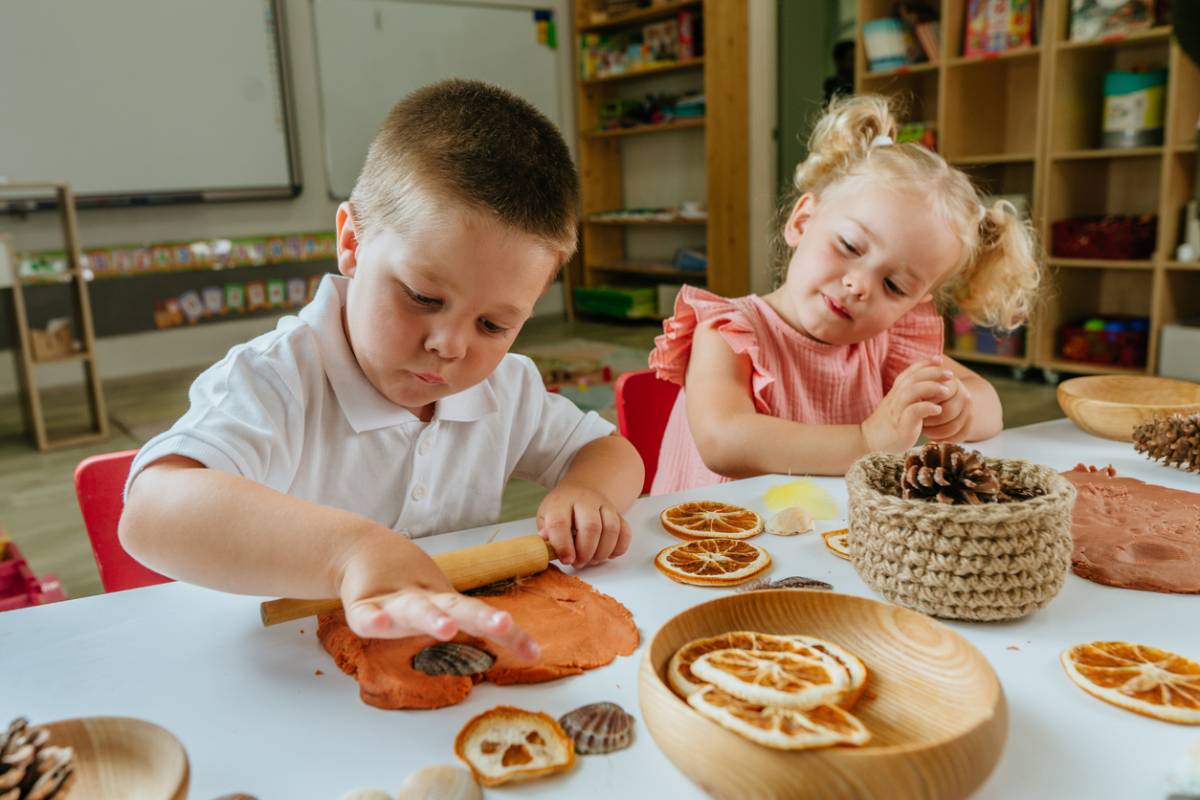
For infants, this might mean black-and-white visual mobiles or grasping toys that help build coordination. Toddlers benefit from toys such as stackers, shape sorters, and simple puzzles that promote fine motor skills and problem-solving abilities. As children grow older, toys can introduce early math, literacy, and practical life skills, such as pouring water, slicing wooden fruit, or using a screwdriver set.

These seemingly simple activities foster independence, confidence, and focus. They also mirror the kinds of hands-on learning that children experience daily in Montessori school environments.

Look for Toys That Promote Independence and Purpose

A foundational principle of Montessori education is helping children do things for themselves. This value should be reflected in the toys you choose.

Montessori toys should encourage your child to explore and complete an activity without needing constant adult intervention. That’s why you’ll often see toys that have a clear beginning, middle, and end. For example, a set of nesting cups or a ring stacker provides your child with a clear goal: to sort, arrange, or complete the set. There’s a natural reward in finishing the task, and no need for flashing lights or congratulatory sounds.

Avoid Overly-Themed or Passive Entertainment Toys

One of the easiest ways to spot a non-Montessori toy? It’s probably based on a popular cartoon, requires batteries, or does all the playing for your child.

While these kinds of toys may be fun in small doses, they don’t support the kind of deep, self-directed learning Montessori emphasizes. Characters and fantasy elements can sometimes distract from the real-world learning that helps children understand and relate to their surroundings.

Instead, choose toys that reflect reality, like miniature kitchen tools, realistic animal figurines, or child-sized cleaning sets. These allow children to mimic adult behavior in a safe and developmentally appropriate way.

Simplicity and Focus: Less Is More

A cluttered playroom filled with dozens of toys can be overwhelming for children. Montessori encourages minimalism, where fewer, better-selected toys allow for deeper concentration and longer playtime.

Maintain a rotation system by offering a limited number of toys at a time and switching them out periodically to keep interest high. Look for toys that isolate one concept, such as a puzzle that teaches matching or a set of beads for counting. Simplicity helps children stay focused and increases the likelihood of mastering each new skill before moving on to the next one.

This approach mirrors the structured yet flexible learning environment found in high-quality Montessori school programs, where materials are curated to support purposeful engagement.

The Role of Practical Life Toys in Learning

Some of the most powerful Montessori toys don’t resemble toys at all—they look like real tools. This is by design.

Practical life toys enable children to safely and developmentally supportively mimic adult tasks. Think of pouring pitchers, sweeping sets, or small gardening tools. These toys help children develop muscle memory, improve hand-eye coordination, and build confidence. Most importantly, they make children feel capable, which is one of the central goals of Montessori education.

By giving your child the tools to take care of themselves and their space, you’re helping them grow into independent, responsible individuals.

Take the Next Step Toward a Thoughtful Montessori Experience

Ready to learn more about how Montessori can enrich your child’s growth? Contact Future Minds Montessori to explore our school programs or schedule a tour today.
featured image for article on how to reupholster an ottoman

How to Reupholster an Ottoman

Even the sturdiest and most reliable ottomans can begin to show signs of wear after years of use. The good news is that reupholstering an ottoman is a manageable project, especially for people with no prior experience. In this article, we discuss how to reupholster an ottoman and walk you through all the steps of the process.

How to Reupholster an Ottoman

One way to reupholster your ottoman is to trust professionals with this job. For this, you will need to find a reliable studio or an individual master who works with furniture restoration, choose the reupholstery fabric, and pick up your ottoman when it is ready.

Having a professional restore your furniture can save you time and effort, but it will be more expensive than doing it yourself. Ottoman reupholstery can be a fun, rewarding, and relatively uncomplicated project if you have never done reupholstery before. Here are the steps we recommend taking when reupholstering your ottoman:

Prepare the Right Tools

Tools that you will need for your ottoman reupholstery project include:

  • A heavy-duty staple gun
  • A staple removal or a flathead screwdriver
  • Pliers
  • Scissors
  • Measuring tape or a long ruler 
  • Chalk for fabric marking
  • Screwdriver if your ottoman has legs that will need to be reattached
  • A sewing machine can be needed for some projects that require sewing cushion covers or piping

Start by Removing the Old Upholstery

We recommend starting with this step because it allows you to measure the old fabric and use the measurements when purchasing new fabric. To remove the old upholstery, follow these steps:

  • Snip the thread that holds the fabric. If the fabric is attached to the ottoman by staples, use a special staple remover or a flat screwdriver. If staples break off during the process, use pliers to remove the remaining parts.
  • Once nothing holds the fabric in place, you can peel it off. However, try not to displace the padding underneath it if possible.
  • Mark all the pieces of the fabric to remember what part of the ottoman they belong to.

Replace the Padding if Necessary

If the padding in your ottoman is uneven or gets damaged or displaced when you take off the old upholstery, consider replacing it with new foam padding or smoothing it out by adding new batting on top of the existing padding. Make sure to take the thickness of the new padding into account when buying and cutting your new fabric.

Prepare the New Fabric

  • Carefully measure the old fabric and add several extra inches to each measurement. If you are a complete beginner, consider purchasing extra fabric to account for potential errors. 
  • Choose the new fabric. We recommend going for durable upholstery fabric. Please note that non-upholstery fabrics will wear out very quickly. Generally, the most durable fabrics are heavy-duty vinyl, polyester, and nylon. Also, some sellers offer upholstery fabric called performance fabric. Leather is a durable option, too, but this material requires special tools and will likely be very challenging to work with for a beginner without specialized training.
  • Once you have your new fabric, transfer the measurements onto it, using a ruler and chalk for fabric marking. Use old fabric as a guide. Once you are certain that all measurements are accurate and you have accounted for folds, wrapping, and attachment, cut the fabric.

Attach the New Fabric to Your Ottoman

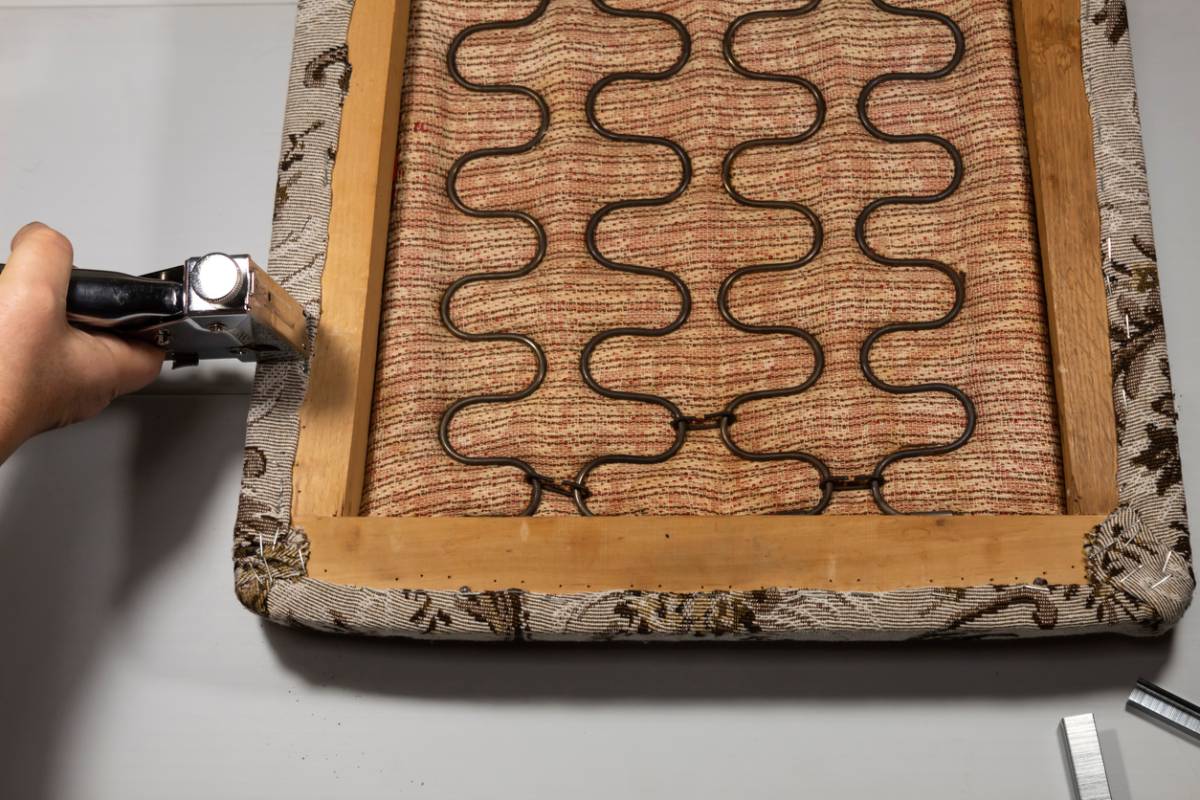
To attach the new fabric to your ottoman, start with the top and then reupholster the sides of the ottoman. Make sure that the fabric fits tightly on every side of your ottoman when attaching. Also, make neat corners by securing the folds with staples. We recommend using a staple gun to attach the fabric to your ottoman, as it is one of the most beginner-friendly tools.

Add the Finishing Touches

Once the main part of the reupholstery project is complete, carefully trim away the excess fabric on the bottom of your ottoman and reattach the legs or hardware (make sure everything is attached securely.) You can also add decorative elements to your ottoman, such as piping, decorative buttons, or nailhead trim.

Get a Beautiful New Ottoman at A. Rudin

Reupholstering your ottoman can be a satisfying project and a great way to add a personal touch to your favorite piece of furniture. However, a reupholstering project requires time, patience, and the right tools. If you’re short on time and need a new ottoman, do not hesitate to explore our beautiful and high-quality luxury furniture collections on our website. 

featured image for are rooler skates allowed at skatepartks article

Are Roller Skates Allowed at Skateparks?

If you are considering starting rollerskating or switching from flat surfaces to a more challenging environment, you might be interested in going to a skatepark. But are roller skates allowed at skateparks? Please read our article to find out.

Are Roller Skates Allowed at Skateparks?

Skateparks are designed for wheel-based sports and are typically equipped with smooth surfaces, bowls, rails, and ramps. Often, skateparks are associated with skateboards and BMX bikes. However, as roller skating is gaining more and more popularity, a growing number of roller skaters appear in skateparks. 

Although, in general, roller skaters are welcome at skateparks, we recommend considering such factors as the rules and culture of the park you want to visit and personal safety. Let us look at these points in more detail.

Acceptance of Roller Skates in Skateparks

In general, most skateparks do not restrict visitors based on the type of equipment they use, meaning that regardless of whether you ride a skateboard, BMX, scooter, inline skates, or quad roller skates, you are typically free to use the space. 

Check the Rules of the Skatepark First 

Skateparks can have their own rules. These rules are typically posted at the entrance of the park. Some skateparks also have websites where you can check the rules and restrictions. Alternatively, you can try contacting the local parks and recreation department.

The rules might regard allowed equipment, specific attendant groups and time of their attendance, the number of people allowed to attend at any given time, or the residency of the attendants. Additionally, check the rules of the park for safety requirements (for example, many parks require wearing a helmet) and specific restrictions. 

Consider and Respect Skatepark Etiquette and Community

Nowadays, many skateparks have inclusive, diverse, and supportive communities. To enjoy being a part of such a community and to help it grow and improve, we recommend considering and respecting the existing etiquette of the skatepark you are going to attend, as well as several general rules of thumb:

  • Take turns using skatepark equipment, and do not try to cut in front of other people who are waiting for their turn. Not only is it disrespectful, but it is also highly unsafe.
  • Be aware of your surroundings and other people in the park, particularly of the flow of movement. Move in the same direction as other skaters to avoid creating collisions and hurting yourself and others.
  • Do not hesitate to communicate with others. Even a simple nod or eye contact can be sufficient to signal that you are going in a specific direction or planning to use certain equipment or features.
  • Never leave your gear, bags, or other things lying around and creating a hazardous environment for other people in the park. 
  • Respect people around you and be friendly, as skateparks are shared public spaces. This way, you will contribute to building a strong local community and make new friends as well. Also, do not hesitate to help others if they need it. 

Tips for Roller Skating at a Skatepark

We recommend following several simple rules to enjoy your experience to the maximum staying safe at the same time:

  • Start by practicing on quarter pipes and small ramps before challenging bigger options or bowls.
  • Remember that a lot of people in skateparks perform tricks or move at high speed. So, be prepared to pay attention to your surroundings and put safety first.
  • Always wear your safety gear, which should include a helmet, knee pads, elbow pads, and wrist guards, as breaking a bone is painful and will prevent you from skating for weeks or even months.
  • Consider taking a class for beginner roller skaters. In fact, many skate communities offer such classes to teach beginners how to navigate a skatepark and stay safe.
  • Learn and practice falling safely and getting up quickly to avoid collisions with other skatepark users. Rules for safe falling include falling on your pads on your knees and elbows and tucking in your arms to avoid wrist injuries.
  • Bring a friend to skate together, especially if you feel shy about being in a new environment.

Get Your New Gear at Crazy Skates

Most skateparks offer a supportive environment and fun experience for both new and experienced skaters as long as you respect the rules of the park and its community. However, to enjoy your experience, you also need reliable, good-quality gear. If you are considering upgrading your equipment or buying your first set, explore options at our skate shop. Crazy Skates offers everything you need to skate safely and confidently.

featured image for article how to use text message automations in billing and finance

How to Use Text Message Automation in Billing and Finances

In today’s digital landscape, businesses are continually seeking ways to streamline their operations and enhance their communication with customers and the target market. One of the most powerful yet underutilized tools in billing and finance is text message automation. Text messages are instantly delivered and have high open rates. This enables SMS automation to offer convenient, effective, and budget-friendly solutions for managing financial transactions, sending reminders, and enhancing customer engagement. Text message automation in billing and finance can benefit you whether you are a small business owner, a freelancer, or a part of a large organization. If you want to know how to use text message automation in billing and finances, here is your guide.

How to Use Text Message Automation in Billing and Finances

Automated Payment Reminders

Missed payments can be problematic and costly. To prevent any inconvenience, you can send timely automated payment reminders to your customers or clients before their due dates. Friendly reminders such as:

“Hi, Alex, your invoice #4522 for $200 is due on May 20. You can pay using this link: [payment link]. If payment has already been made, please disregard this message. Thank you.”

Sending automated payment reminders can dramatically reduce late payments and eliminate the need for awkward collection calls. Texts can be scheduled days or weeks in advance. Doing so will free up your schedule while ensuring regular communication with clients and customers.

Invoice and Receipt Notification

Remember the days when invoices were only sent by email or snail mail? They are gone. With text automation, businesses can send their customers brief notifications once an invoice has been generated or a payment has been received. 

Messages like the following can help build trust and create an organized and customer-focused image:

“Your payment of $200 has successfully been processed. Thank you for your business! – [Your Business Name]”

Real-Time Fraud Alerts and Account Notifications

Banks and other financial institutions frequently utilize SMS automation to safeguard their clients against fraud.

You can also do the same for your clients and customers by alerting them of:

  • Unusual account activity
  • Overdue balances
  • Failed payment attempts
  • Subscription renewals

These notifications can help your clients take immediate action to avoid bigger problems later on.

Streamlined Subscription Management

If you are a business offering subscription-based services, SMS automation can be a game-changer for you. You can notify your subscribers when their plan is due for renewal, give them options to update payment methods, or confirm successful renewals via text.

Two-Way Texting for Two-Way 

Some platforms allow two-way messaging, which enables customers to reply using simple inputs, such as “1” for “pay now,” “2” for “delay payment,” or “3” for “speak to a representative.” This will allow you to enhance customer satisfaction and reduce the need for manual follow-ups.

Integration with Accounting and CRM Software

Many platforms seamlessly integrate with tools such as QuickBooks, Zero, and Salesforce, among others. This means:

  • Invoices can trigger an automatic text reminder
  • A new client entry in your CRM can activate a welcome message and billing schedule
  • Past-due invoices can also trigger escalation messages after a specified number of days

This allows you to maintain regular communication with your clients without the need for extra admin work.

Financial Polling or Payment Schedule

If you want to know about how your clients feel about your billing or financial services, it is easy to get this information just by sending a message like:

“How easy was your last payment experience?

Reply “1” for easy

Reply “2” if difficult”

Legal and Compliance Considerations

Remember that there are local laws like the U.S., there is the TCPA or the Telephone Consumer Protection Act, which require consent before sending automated texts. You need to get opt-in permission, provide an easy way to opt-out and ensure customer data is securely stored.

Take Control of Your Billing and Finances Today

Text message automation is more than a communication tool. It boosts your financial efficiency through payment reminders, real-time alerts, or even automated receipts.

If you are not already using SMS automation in billing and finances, today is the time to start using text messaging for accounting.  Simplify your billing process, get paid faster, reduce late payments, and enhance client satisfaction without the stress of manual tasks. Call us today and discuss your goals and requirements with us.

Featured image for Why Do Roller Skaters Wear Long Socks?

Why Do Roller Skaters Wear Long Socks?

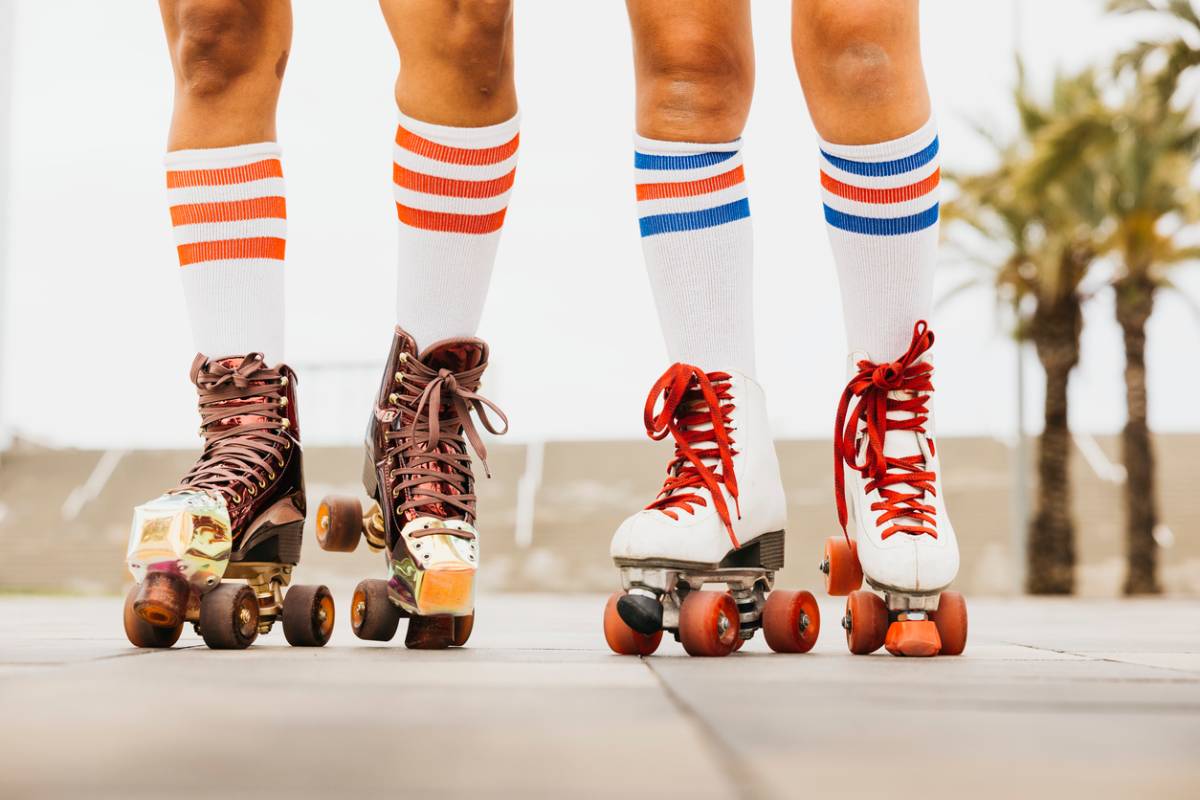
From the disco ball days of retro roller rinks to the neon-lit skate parks of today, one fashion detail always seems to roll right along with the skates: long socks. But have you ever stopped to ask: Why do roller skaters wear long socks? 

Sure, they look cool, but there’s more to skating socks than just aesthetics. Skaters of all levels reach for them for some very practical reasons, so let’s dive into why these stylish socks are a staple in the skating community and what they can do for you. 

Why Do Roller Skaters Wear Long Socks?

For the most part, roller skaters wear long socks for comfort, protection, and (yes) some personal style. While it might seem like a simple accessory, it can also actually enhance your overall skating experience from the moment you lace up your skates. 

One of the biggest benefits of long socks is preventing friction and blisters. Even the most well-fitting skate boots can cause pressure points or rubbing when you’re skating for long periods, especially when you’re breaking into a new pair. Long socks, in this instance, act as a soft barrier between your skin and the sometimes rigid material of your skates, protecting your ankles and lower legs from discomfort. 

At the same time, long socks also offer light compression to your lower extremities. This can improve circulation and reduce fatigue in your legs, which is particularly useful for long skate sessions. The added coverage helps your muscles stay warm and responsive, meaning less chance of cramping or soreness later on. 

The Fashion Side of Function: Socks That Make a Statement

But there’s more than just practicality when it comes to socks. Roller skating is all about expression, and your personality doesn’t stop at your skates. No matter where you’re choosing to skate, long socks give you the chance to show off your individual flair. And trust us, they’re a big part of skating culture.

You’ll often see skaters coordinating their socks with their skates or outfits, creating fun and creative looks. Wild patterns, bold prints, bright neons, sparkles, you name it, it’s probably out there. At Crazy Skates, our skating socks are made to turn heads and support your ride.

What Makes a Sock “Skating-Ready”?

Remember, too, that not all long socks are created equal. Just grabbing a random pair of knee-highs might not cut it if you’re serious about skating comfort. So, what should you look for?

First up, you’ll want to pick out some moisture-wicking fabrics like polyester blends, nylon, or technical knits. These materials are designed to draw sweat away from your skin, keeping your feet dry, cool, and blister-free even during intense sessions. Cotton, while cozy for lounging, tends to hold moisture, making it a poor choice for active skating, as damp socks can cause chafing and discomfort.

Breathability is just as important. When your feet can breathe, you’re less likely to overheat or experience that dreaded “soggy sock” feeling. Good airflow also helps prevent the buildup of odor-causing bacteria inside your skate boots, which is a must if you’re skating multiple times a week. Look for mesh ventilation zones or lightweight weaves in your socks for extra airflow without sacrificing durability.

Another thing to keep in mind? Durability and softness. You want socks that can stand up to frequent skating without thinning or pilling after a few washes. High-quality blends offer a nice balance between a smooth feel and long-lasting wear, so your socks stay comfy and effective no matter how often you hit the rink or streets.

Other Roller Skating Apparel Choices that Serve a Purpose

While long socks steal the spotlight, they’re just one piece of a smart skater’s outfit. Let’s explore some other apparel choices that are more functional than they might appear:

Padded Shorts or Leggings

Perfect for beginners or anyone pushing the limits, padded bottoms help protect your hips, tailbone, and thighs during falls. They’re often lightweight and discreet, and they are easy to wear under your favorite shorts or skating skirts.

Protective Gloves or Wrist Guards

Wrist injuries are common in skating. Gloves with built-in wrist support or separate guards are essential for protection and peace of mind. Plus, you can find fun designs that match your socks and skates.

Mesh or Performance Tops

Breathability is key. A fitted, moisture-wicking shirt will keep you cool and dry without restricting movement, especially if you’re skating outdoors or at a packed rink.

Ready to Sock Up and Roll Out?

When you’re ready to take your skating style and comfort to the next level, don’t overlook the power of long socks. Visit Crazy Skates, your trusted roller skating shop, to browse our collection of skating socks that bring both performance and personality to the rink.

Featured image for 6 Ways AI Generated Messaging Can Improve Business Practice

6 Ways AI-Generated Messages Can Improve Your Business Practice

Let’s be honest for just a minute—running a business in today’s world is no small feat. Between staying competitive, meeting customer expectations, managing a team (sometimes multiple), and keeping your operations running smoothly, it can feel like you’re trying to balance a lot at once. Too much, maybe. And communicating with everyone? That can be the hardest thing to balance. But what if you could make communication with customers easier, faster, and even smarter? Enter AI-generated messages.

These modern solutions transform the way businesses engage, respond, and even deliver value. And, no, they aren’t the clunky, robotic replies of the past. Today’s AI tools, especially when used through robust automated texting software like Trumpia, create messages that are natural, helpful, and impressively effective.

Let’s dive into six ways AI-generated messages can improve your business practice (and just might become your new secret weapon).

6 Ways AI-Generated Messages Can Improve Your Business Practice

1. Improve Efficiency with Automated Texting Software

Time is money, and nowhere is that more apparent than in business communications. AI-generated messages, when used through automated texting software like Trumpia, allow your team to streamline interactions and reduce time spent on repetitive tasks.

With automation features such as scheduled campaigns, keyword-triggered messages, and smart response flows, you can keep your audience informed without constantly manning your inbox. Whether it’s appointment reminders, order confirmations, or lead follow-ups, automation ensures no message gets missed, and your staff can focus on strategic growth instead of manual responses.

2. Personalize Customer Engagement

Modern consumers don’t want generic messages; they want messages that speak directly to them. AI message generators use customer data to create customized communications based on behavior, purchase history, preferences, and more.

The result? Customers feel like you actually know them. That personal touch translates into stronger relationships, higher satisfaction, and increased conversions. Trumpia’s AI Message Generator makes it easy to create these hyper-relevant messages at scale, so every customer feels like a VIP, even when they’re one of thousands.

3. Maintain a Consistent Brand Voice

Your brand’s voice is your business’s personality, which means keeping things consistent is everything. It builds trust, familiarity, and professionalism. AI-generated messages help make sure that every text, notification, or promotion aligns with your brand’s tone and style, whether you’re playful and casual or sleek and corporate.

By using templates and predefined guidelines, AI helps your business speak with one unified voice, even across multiple departments or locations. No more worrying about rogue phrasing or off-brand responses; your message will always sound just right.

4. Accelerate Content Creation Across Channels

We get it… Coming up with the perfect message can be a time-consuming grind. AI message generators dramatically speed up the content creation process by offering ready-to-use drafts, message variations, and smart suggestions based on your goals.

Need to launch a flash sale in 10 minutes? Want to test different versions of a welcome message? AI helps you go from idea to execution in a fraction of the time. That’s especially useful when managing multiple channels, such as text, email, and social media, where timeliness can make or break engagement.

5. Improve Customer Support and Responsiveness

Nothing frustrates a customer more than waiting too long for a response. AI-generated messages can drastically improve your customer support game by delivering immediate answers to FAQs, status updates, or common issues.

Even better, AI can assist your human agents by drafting responses for quick review and approval, helping support teams stay consistent and lightning-fast. This blend of automation and human oversight ensures that your customers feel heard and helped without unnecessary delays.

6. Gain Insights Through Real-Time Data Analysis

Here’s a major bonus: AI doesn’t just send messages; it learns from them. With built-in data analysis capabilities, tools like Trumpia can evaluate message performance in real-time. Which texts get the most engagement? What language resonates with your audience? What’s driving conversions?

These insights give your business a clear roadmap to better communication strategies. By knowing what works (and what doesn’t), you can continuously refine your messaging, sharpen your targeting, and improve overall results without all the guesswork.

Why AI-Generated Messages Are a Win-Win for Modern Businesses

The magic of AI-generated messaging lies in its balance: you get faster, more efficient communications and more meaningful customer engagement. It’s the best of both worlds—smarter tech and better human connection. Whether you’re a small startup or a large enterprise, integrating AI messaging into your workflow helps you scale communication, impress your customers, and stay agile in a competitive market.

And when you pair this power with automated texting software like Trumpia, you’re not just sending messages; you’re building relationships, fueling growth, and reclaiming your time.

Ready to Use AI-Generated Messages to Transform the Way You Communicate?

Discover how Trumpia’s AI-powered messaging tools can revolutionize your business communication. Visit Trumpia today to explore features, schedule a demo, and start messaging smarter.

Featured image for 5 Things to Know Before You Start Roller Skating

5 Things to Know Before You Start Roller Skating

Roller skating is arguably one of the most fun (and thrilling) ways to get up, get moving, and stay active, regardless of whether you’re gliding through your neighborhood, hitting the rink, or trying out a new trick at the park. But let’s be honest. Skating is also about more than just stepping into a pair of skates and taking off down the road. It is a majorly engaging hobby that can help you get more out of life and even get into shape, but a bit of information ahead of time can make the whole process so much easier! That’s why we’re here to give you a jumpstart with essential tips, starting with these five things to know before you start roller skating! 

Get the Basics Down

Roller skating might seem effortless, especially if you’re used to watching seasoned skaters, but it all begins with a few key fundamentals. First off, balance is everything! Before you start moving, practice standing still in your skates. Use a wall or railing, or even a friend, for support, bend your knees slightly, and center your weight over your feet. Getting used to this stance is the building block for any and all future movement. 

Next, expect there to be a learning curve (and embrace it!) Roller skating is a full-body workout, and your muscles, especially the ones in your core and legs, will probably scream at you after your first time skating. Be patient with yourself and your body. Progress comes with consistency, not perfection. 

Make Sure You Have the Right Equipment from the Start

When you’re just starting, quality skating equipment could very well make or break your first experience. Investing in a pair of roller skates that fit properly is step one. Ill-fitting skates are not only uncomfortable, they can actually be unsafe! That’s just one reason Crazy Skates offers a full range of sizes and styles, including some excellent options in our discount roller skates section that are perfect for beginners who want performance without the premium price tag. 

And don’t forget the other key essentials like a helmet, knee pads, elbow pads, and wrist guards. These extra safety pieces might seem like overkill, but they’ll save you a world of hurt and give you the confidence to push yourself safely. Like your skates, your safety gear should fit snugly and comfortably without limiting movement. 

Surfaces Matter More Than You Think

Not all skating surfaces are created equal, especially when you’re just starting! Plenty of beginners assume that they can skate anywhere, but the surface you’re skating on can hugely affect how your skates respond and how safe you feel. Smooth, flat indoor rinks are the best for practicing the basics, as they’ll have no cracks, rocks, or sudden inclines/declines to throw off your balance. 

If you are skating outside, stick to clean, paved trails or tennis courts while building your skills. Rough sidewalks or roads can trip you up fast. Once you’re more confident, you can explore these spots, but starting simple is smart. 

Learning to Fall is Just as Important as Learning to Roll

Here’s a tip that might sound backward but is absolutely important: learn how to fall! Everyone does it, even the pros. The trick is falling safely. Try to fall forward onto your pads rather than back onto your tailbone or wrists. Keep your arms tucked in, and use your knee pads and wrist guards to absorb the impact. 

You’ll also want to practice falling on soft surfaces, like grass or carpet, in full gear. It might feel silly, but building that muscle memory will save you from panicking when it happens unexpectedly on the pavement. 

Skating Style and Personalization Make it More Fun

Once you’ve got the basics down pat, roller skating becomes all about style and self-expression. That’s also where the fun really begins! From LED wheels to bright laces and cool decals, you can personalize your skates and gear to match your vibe. And, lucky for you, Crazy Skates has an amazing variety of colors, finishes, and add-ons to make your gear feel just as bold as you are. 

Ready to Roll? Let Crazy Skates Help You Get Started

Whether you’re shopping for your first pair or upgrading your setup, Crazy Skates has the skating equipment and deals to get you rolling in no time. Explore our discount roller skates, grab your safety gear, and let the adventure begin!

Featured image for What Are the 12 Core Early Childhood Education Units?

What Are the 12 Core Early Childhood Education Units?

Teaching comes with many challenges. Each grade level requires different competencies and, therefore, requires different and specific skills and knowledge from teachers. Early childhood education, for example, is one of the most sensitive and formative stepping stones of a child’s life because they are still in their most absorbent stage during that time. If you are considering a career in Early Childhood Education, you have probably heard of the 12 core units required to get started. These units are often the minimum academic foundation for working in licensed child care centers like Head Start programs, Preschools, and other early education centers in California and other states that follow the same standards. These are required to ensure that teachers have a strong understanding of child development, curriculum planning, and health and safety. But what are these 12 early childhood education units?

What Are the 12 Core Early Childhood Education Units?

Perhaps surprisingly, the twelve core early childhood education units do not refer to twelve individual principles that educators must complete for their teaching credentials. Rather, the units refer to course units that must be completed as part of a teacher’s education. Educational courses are typically 3-5 units—ECE units, in particular, are generally three each—so aspiring educators will complete approximately four courses to satisfy this requirement. The courses taken to satisfy ECE requirements are typically as follows.

Child Growth and Development (3 units)

This is the course that teaches how children grow physically, emotionally, and cognitively from the time they are born until around 8 years old. Developmental milestones, exploration of the theories of development by Piaget and Erikson, and the role of genetics and environment are included in the topics.

The topics covered help educators develop age-appropriate learning experiences and recognize delays early on.

Child, Family, Community (3 units)

The focus of this course is the relationships between young children, their families, and their communities. Future educators get to examine cultural diversity, family structures, and societal influences on child development.

It is important to build strong relationships with children in order to give them the best possible education. This also requires building relationships with their families and understanding their backgrounds so teachers can best support a child’s learning and overall well-being.

Introduction to Curriculum or Principles and Practices of Teaching Young Children (3 units)

In this class, future educators get to explore developmentally appropriate practices in early childhood education. They learn about topics on curriculum planning, learning environments, play-based learning, and the role of observation and assessment.

This course is intended to help educators design lessons and activities that promote learning while at the same time taking into consideration the unique needs of individual children.

Health, Safety, and Nutrition (3 units)

This course is where the students learn about promoting the physical health and safety of children in early learning setups. It covers various topics such as child abuse prevention, emergency preparedness, nutritional guidelines, and disease prevention.

This course ensures that the staff at early education centers are equipped to mentally and physically care for children in their centers and handle the pressure of caring for so many children at once in a closed environment. Ensuring a safe and healthy environment is a top priority and responsibility of any early childhood education center and provider.

Potential Variations

Most schools require that students take twelve units each semester. However, they may be packaged differently depending on how the program is designed. For example, in some schools, the health and safety course may be combined or counted slightly differently. Be that as it may, the essential content areas remain the same.

In addition, there are times when employers require more than just 12 units. For example:

  • 16 units may be required for lead teaching positions
  • Specialization units in infant toddler care/special education, or administration, may be required depending on the career path you plan to take.

Logistics

You can complete these 12 core units at 

  • Community colleges
  • Four-year universities
  • Accredited online programs
  • Vocational schools

After completion of the 12 units, you will then be qualified for entry-level positions such as:

  • Teacher Assistant or Teaching Aide
  • Associate Teacher (with experience)
  • Substitute Teacher in a preschool
  • Childcare worker in licensed centers

Completion also opens the door to further study in:

  • Associate degrees in Early Childhood Education
  • Bachelor’s degree in Childhood Development or related field
  • State certification or permits

More than just job eligibility and completing qualification requirements, these units can help you build confidence and provide you with a deeper understanding of how young children accumulate learning and how they grow. Many students also discover their passion for teaching while undergoing these courses of study, and the courses become launchpads for lifelong careers in education, child psychology, or child advocacy.

The Highest Standard of Care at Towne and Country Early Education Center

At Towne and Country Early Education Center, we believe in the power of well-prepared, well-qualified educators. So, if you are looking for a learning center where educators and assistant teachers are passionate and well-equipped to help in the education and development of preschool children, reach out to us today so you can discover how we can be your partner in supporting your little one.

What’s the Difference Between Kick, Commuter, and Trick Scooters?

Scooters have become widely popular in business and entertainment in recent years. Skate shops are taking advantage of this and keeping a selection of scooters in stock to suit various activities. Personal mobility is more diverse than ever, and scooters have emerged as a popular choice for various lifestyles and preferences. Yet many remain unaware of the distinct categories that exist within this mode of transport. Kick scooters, commuter scooters, and trick scooters each serve unique purposes and are designed with specific features to cater to their respective users.

While kick scooters offer a simple and efficient means of getting from point A to point B, commuter scooters prioritize comfort and practicality for daily travel, and trick scooters are engineered for performing stunts and tricks in skate parks. Understanding the difference between kick, commuter, and trick scooters not only enhances your ability to choose the right variation but also enriches your overall experience of scooting.

What’s the Difference Between Kick, Commuter, and Trick Scooters?

Kick, commuter, and trick scooters share many commonalities, but where they differ has a significant impact on whether or not you get the most out of your scooter experience. They differ in their purpose, recommended ages of use, and durability. Commuter scooters are better suited for further distances, and kick or trick scooters are better for entertainment purposes. Kick scooters are the preferred option for children and beginners; they are also the most widely recognized. Commuter scooters are quickly gaining momentum with their increase in popularity in recent years due to their convenience and portability. Each type is outlined in more detail below.

Kick Scooter

The most common is the kick scooter. Put simply, a kick scooter is a mode of transportation you propel by pushing off the ground with one foot. It offers a simple design consisting of just a deck, wheels, and handlebars, making it lightweight. 

Kick scooters are best suited for beginners because of their ease of use and simplicity. They are also typically the most affordable and lightweight option.

Pros 

  • Affordable
  • Great workout
  • Exceptionally lightweight

Cons

  • Not as efficient as electric scooters
  • Limited range
  • Can be difficult to operate if you are unfamiliar
  • Not suited for off-road terrain.

Commuter Scooter

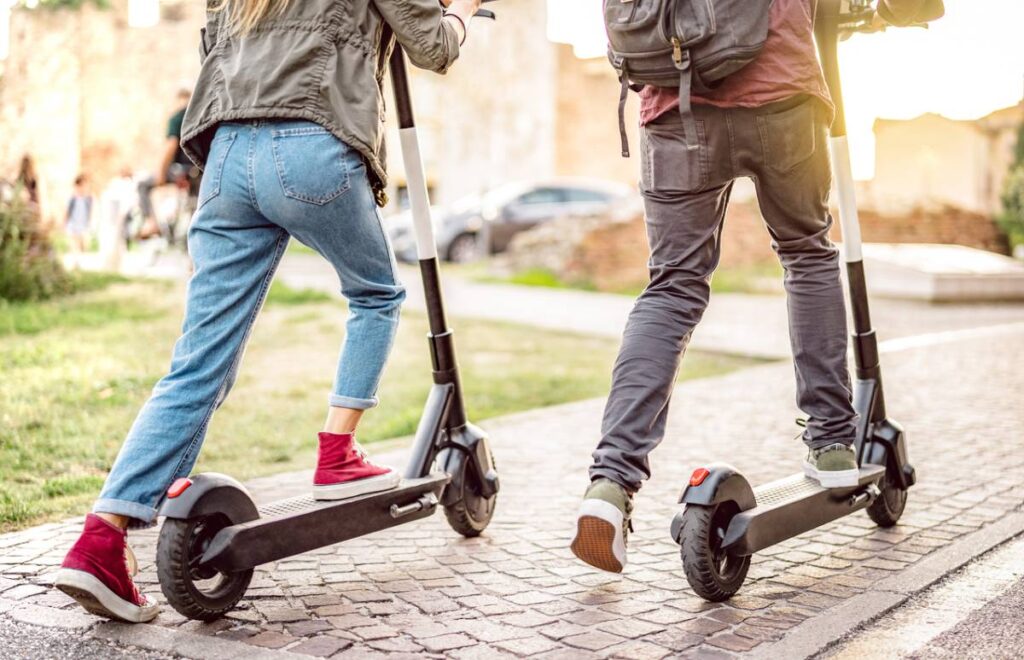
Quickly growing in popularity, the commuter scooter is an electric kick scooter. They are designed to be a convenient alternative to traditional forms of commuting. Often, they are lightweight and foldable, making them conveniently compact and portable. 

Commuter scooters are more progressive, taking advantage of technology to make them electric. Commuter scooters prioritize comfort and practicality during daily commutes. 

Pros 

  • Lightweight
  • Affordable
  • Compact

Cons

  • Can be bumpy
  • Not suitable for hills
  • May require a charger for longer commutes

Trick Scooter

Designed for those who want to learn or develop their skills in performing stunts and tricks. Trick scooters are built from more durable materials and features to take on the impacts and pressure that jumps, grinds, and other moves require. They can withstand greater force than commuters and kick scooters. 

Trick scooters impart greater durability in many ways to customize them to suit your preferences. However, these are often on the heavier side.

Pros 

  • More durable design and materials
  • Customizable

Cons

  • Heavier
  • Pricey 

Which Scooter is the One For You?

The world of scooters offers a diverse range of options to suit various needs and preferences. Kick scooters provide a simple, portable solution for short trips and last-mile commutes. Commuter scooters elevate the experience with electric power and enhanced features, making longer journeys more comfortable and efficient. Trick scooters, on the other hand, cater to thrill-seekers and extreme sports enthusiasts, offering durability and maneuverability for performing stunts.

Whether you’re looking for convenience, eco-friendly transportation, or an adrenaline rush, there’s a scooter type that’s perfect for you. So, hop on, push off, and embrace the freedom and fun that these two-wheeled wonders bring to urban mobility and recreational pursuits alike.

Get Started Today with Crazy Skates!

Hurry over for your new ride so you can scoot your way into innovative travel and fun. 

Featured image for What Is Costa Mesa Known For

What Is Costa Mesa Known For?

A vibrant tapestry of culture, creativity, and community, nestled in sunny Southern California, Costa Mesa is known as the “City of the Arts.” Notorious for its eclectic food scene, artistic flair, and thriving shopping districts, this city has become the hub of creativity of all kinds. The bustling streets are filled with unique boutiques, diverse eateries with world-class cuisine, and fantastic local art. Events in Costa Mesa are just as diverse as the culture, offering something everyone will enjoy. Costa Mesa isn’t just a destination; it’s an experience that enchants the senses and invites exploration. Exploring the secrets and hidden gems in Costa Mesa could take a lifetime, but it would be a worthwhile adventure. 

What Is Costa Mesa Known For?

Art and Culture

Art and culture run deep in the veins of Costa Mesa. So much so that individuals passionate about the city’s diversity band together to support the Cultural Arts committee. With this support and the implementation of the Arts & Culture Master Plan, the city illustrates its dedication to keeping creativity rolling within the community. 

Artists District and Murals

Artists from all over have showcased their talents by painting their signature in vibrant colors for all to see. The diverting murals that encompass many businesses in Costa Mesa are a staple of the community. Like artists, tourists from every corner come to see the talented work meticulously created, standing proud amongst the Costa Mesa streets. 

Performing Arts and Events

The city’s thriving arts scene, anchored by the Segerstrom Center for the Arts, has earned it the moniker “City of the Arts.” Diverse theater, music, and visual arts offerings draw tourists from all over the world and still capture the attention of locals. Costa Mesa’s thriving performing arts and events make it a hotspot for tourists. 

South Coast Plaza 

Costa Mesa’s picturesque beauty stands as a shining gem in Orange County, California. The lively city pulses with creative energy, exuding a unique blend of urban sophistication and laid-back coastal allure. The dynamic city of Costa Mesa has garnered a reputation for itself as a prime shopping destination, thanks to the notoriety of the South Coast Plaza and its array of high-end retailers. Yet, Costa Mesa’s allure extends far beyond retail therapy.

Activities

It wouldn’t be California without the scenic Pacific Ocean as the backdrop. In just one mile, you can bask in the sun and hit the waves of the Pacific Ocean. Costa Mesa is truly a diamond among the rough when you consider just how much it has to offer. You can not only enjoy thought-provoking art on every corner, but just a few minutes away, you could be surfing, sailing, and having a great time enjoying fun beach activities. 

Attractions

Loaded with attractions, the city is home to the OC Fair and Event Center and minutes away from Disneyland Resort.  The annual Orange County Fair takes place at the OC Fair and Event Center. Not stopping there, Knott’s Berry Farm is a world-renowned amusement park. Additionally, Costa Mesa offers attractions like Angel Stadium, Aquarium of the Pacific, Santa Ana Zoo, Seaworld, Catalina Island, Legoland, and more. Costa Mesa is the perfect destination for all ages and cultures, and it has tons of fun to be had at every step. 

Local Cuisine

Of course, a city famous for its creativity and culture caters to food enthusiasts, too. Costa Mesa’s dynamic dining scene is a veritable paradise, featuring everything from trendy farm-to-table eateries to hidden culinary treasures, and even the pickiest eaters will find something they love among Costa Mesa’s food offerings. Creativity and culture shine brightly within the cuisine that can be found among the strips of Costa Mesa, making it an explosion for all the senses. 

Costa Mesa’s Diverse Community

In essence, Costa Mesa is known for its perfect balance of commerce, culture, and community. It’s a place where shopping meets art, and culinary adventures await around every corner. The Southern California spirit comes alive in a uniquely captivating way within the city of Costa Mesa. Whether you’re a visitor or a longtime resident, Costa Mesa never fails to delight, inspire, and evoke your inner creativity. In a city so diverse, it is the embodiment of the best parts of Southern California. 

Schedule a Trip to Costa Mesa Today!

Learn what Costa Mesa is known for up close and in person. Get in touch with Travel Costa Mesa now!